Mastering IELTS Speaking
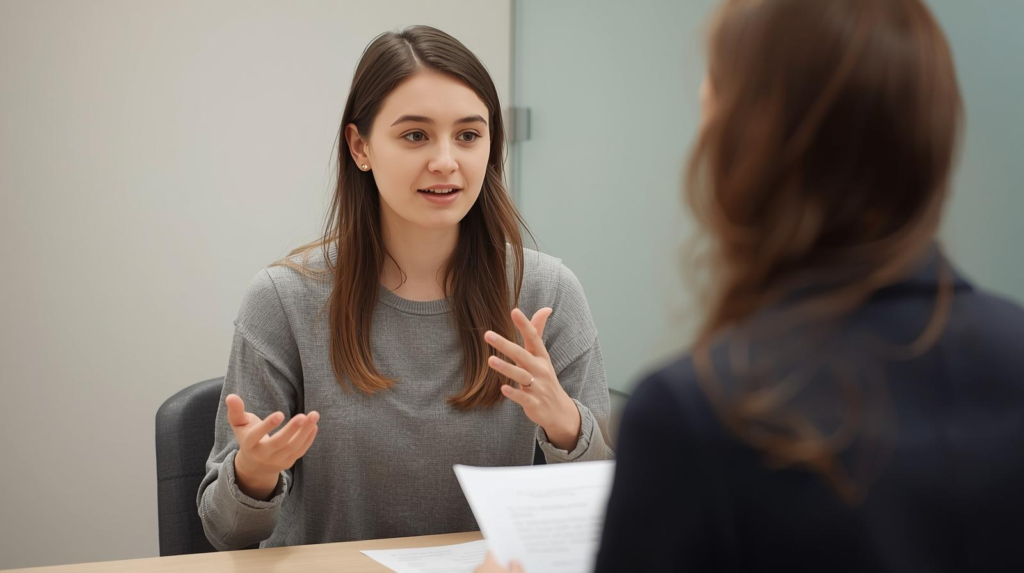
IELTS Speaking is a conversation, not an interview. No trick questions. No perfect answers. The examiner evaluates how naturally you speak.
Speaking happens face-to-face with a trained examiner. You’ll:
- Talk about yourself and everyday topics
- Discuss one extended idea
- Spend 11–14 minutes in the test
The Biggest Problem
It’s not grammar. It’s fear. Students stop thinking clearly, give short answers, overcorrect themselves, or try to sound advanced, losing fluency.
How to Improve
- Extend answers naturally
- Sound confident even with simple words
- Manage hesitation without panic
- Fluency comes from comfort, not perfection
- Mistakes are allowed; focus on rhythm, clarity, and confidence
Stop trying to impress and start communicating naturally. Your band score will improve faster than you expect.
How long is the IELTS Speaking test?
11 to 14 minutes.
Is Speaking done on the same day?
Usually yes, sometimes on a different day.
How many parts are there in Speaking Test?
Three parts. Warmup, Cue Card and Follow Up
Can I ask the examiner to repeat?
Yes, politely, you can.
What topics are asked?
Well, its not certain but it will be general like Everyday life, experiences, and abstract ideas.
Is accent important?
No, clarity matters more.
What if I don’t understand a question?
Ask the examiner to repeat or clarify.
Can I correct myself?
Yes, all capital letters are accepted.
Is grammar more important than fluency?
Fluency and clarity are equally important.
Are answers memorized detectable?
Yes, examiners notice memorized responses.
How is Speaking scored?
Based on fluency, vocabulary, grammar, and pronunciation.
What happens in Part 2?
You speak on one topic for 2 minutes.
Is eye contact important?
Yes, it helps communication.
Can I use informal language?
Yes, if it’s natural and appropriate.
What is the biggest mistake students make?
Trying to sound perfect instead of natural.
Can I pause or think before answering?
Yes, incorrect spelling can make a correct answer wrong.
Can answers be written in capital letters?
Yes, all capital letters are accepted.
What happens if I miss an answer?
Yes, short pauses are natural and better than rushing with unclear answers.